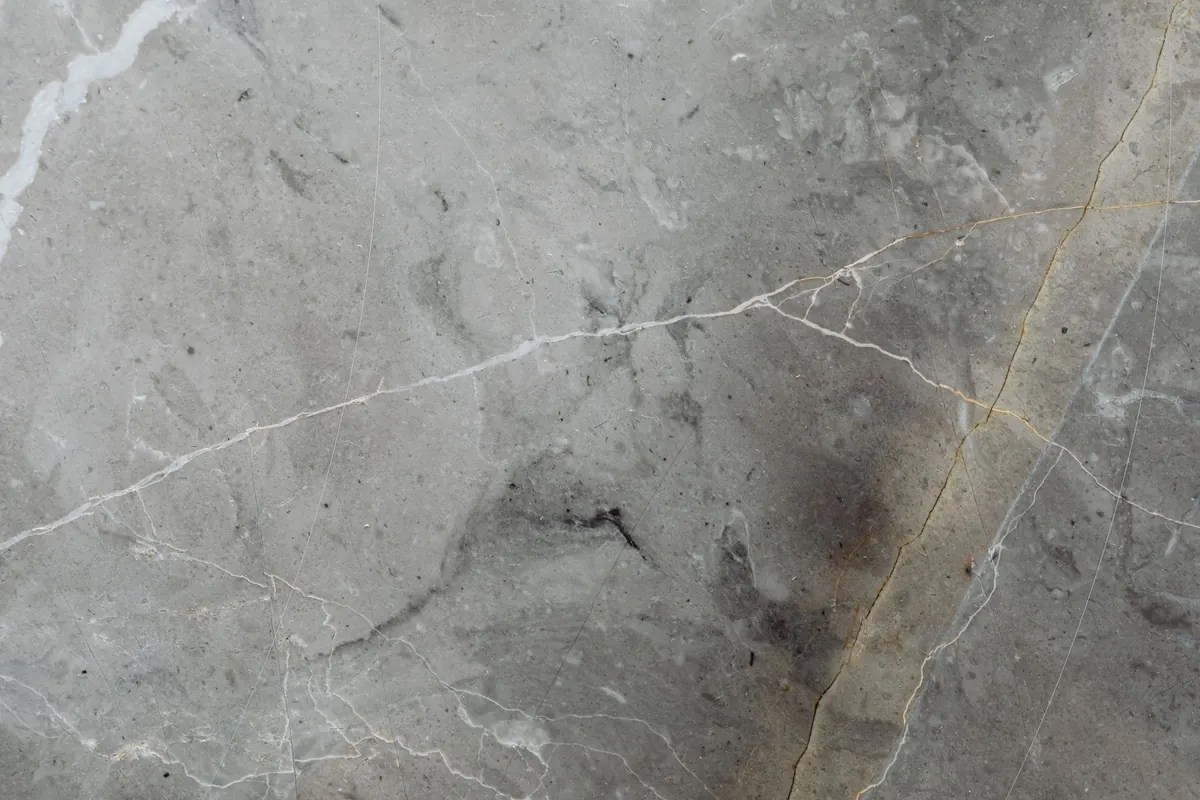
Travertine is one of the more forgiving stones you can put on a floor — until it isn't. It's a form of limestone, laid down in mineral springs, and the same open, softly layered structure that makes it warm underfoot also makes it quick to react to the wrong cleaner. Most travertine floors that come back to life with professional honing weren't worn out by heavy traffic. They were dulled, etched and stained by ordinary cleaning habits repeated for years.
The encouraging part is that the fixes are simple, and most of them involve doing less rather than more. What follows are the mistakes worth breaking, and the safer way to handle both the daily spill and the occasional deep clean.
Flooding the floor with water
A soaked string mop feels thorough. On travertine it's a slow problem. The stone is porous, and unfilled travertine — the kind with the small pits and voids left open — gives water plenty of places to sit. Grout lines drink it too. Do that week after week and you get dull patches, a worn sealer, dark areas that seem to never quite dry, and occasionally pale mineral salts creeping out at the edges of the room.
Damp mopping is the right idea, but the mop should be wrung until it's barely damp. Work in small sections, roughly two or three square metres at a time, and finish by going over the area with a dry microfiber cloth or pad. If you can see standing water or a sheen that stays after a minute, you're using too much. On humid days, a little air movement helps more than you'd expect.
Reaching for vinegar, lemon or any "natural" acid
This is the mistake that causes the most visible damage. Travertine is calcium carbonate, and acid dissolves it. A vinegar-and-water solution, a squeeze of lemon in the bucket, a citrus degreaser "because it's natural" — all of them eat into the surface. On a polished or honed floor you'll see the result as a dull, slightly whitish ring or patch, usually around the sink or where a spill was wiped up. That mark is not dirt. It's stone that's no longer there, and no amount of scrubbing will bring the shine back.
The same logic applies to the heavy end of the cleaning cupboard. Bathroom sprays, limescale removers, rust treatments, grout haze removers and descalers are usually acidic by design. Bleach and aggressive alkaline degreasers won't etch the stone in the same way, but they can break down sealers, stain grout and leave the surface looking flat over time.
If a label mentions lime, scale, rust, "extra strength" or "removes hard water stains," keep it off the travertine.
What to keep off the floor
- White vinegar, lemon juice and citrus-based cleaners
- Bathroom, limescale and rust removers
- Powdered cleansers and cream cleansers with abrasive particles
- Wax, "shine" polishes and general-purpose floor finishes
- Steam mops, especially on unfilled travertine — heat and moisture push water into the pores and stress the sealer
What you actually want is a pH-neutral cleaner made for natural stone, diluted exactly as the label says. If you're trying a new product, test it on a spare tile, inside a cupboard or in a corner under a piece of furniture, and give it a day before you trust it across the room.
Scrubbing harder instead of smarter
When a mark won't lift, the instinct is to add pressure and a rougher tool. Green scouring pads, steel wool, stiff bristle brushes and powdered cleansers all abrade the surface. On polished travertine that means fine scratches that scatter light and make the floor look cloudy. On honed travertine it produces a patchy, uneven sheen that's very hard to hide.
Use microfiber cloths and mops, and a soft nylon brush only where you need it — along grout lines and around the base of fixtures. For something stubborn, let a pH-neutral stone cleaner sit for a minute or two and do the work, then agitate gently. Patience removes more than force does.
Overdoing the cleaner and skipping the rinse
More product does not mean a cleaner floor. Undiluted or over-strength cleaner leaves a thin film behind, and that film attracts dust, holds smudges and dulls the finish. It can also interfere with the sealer the next time you apply one. If the floor feels slightly tacky or shows streaks once it's dry, residue is the usual culprit.
Dilute according to the label, give it a short dwell time, agitate lightly, then rinse with a clean, barely damp mop and dry the surface. Change the water before it turns grey — dirty water just redistributes grit. A two-bucket approach, one for cleaner and one for rinse water, keeps the job quick and the results consistent.
Letting grit and spills sit
Sand, road salt and grit worked into the surface act like sandpaper underfoot. The cheapest protection you can buy is a mat: a coarse one outside the door to catch the worst of it, and a softer one inside to dry feet. Sweep or dust mop every day or two in busy areas, and use a vacuum with the beater bar switched off.
Spills deserve the same urgency. Wine, coffee, citrus juice, tomato sauce, salad dressing and pet accidents are all acidic enough to etch travertine within minutes, and oil-based spills can sink into the pores. Blot, don't wipe. Wiping spreads the liquid and pushes it into the stone. Press a dry cloth onto the spill, lift it, then go over the area with a damp cloth and dry it thoroughly. For oil, a small amount of stone-safe degreasing poultice is better than scrubbing at it.
Sealing at the wrong time, or assuming sealer makes stone invincible
A penetrating sealer slows down how quickly liquids soak in. It does not make travertine stain-proof, and it does nothing at all against acid etching. Treat it as a wear layer that buys you time to blot a spill, not as armour.
Two opposite mistakes show up constantly: sealing a floor that doesn't need it, and never sealing at all. A simple check is to put a few drops of water on the stone in an inconspicuous spot. If they bead up and sit there, the sealer is still working. If the stone darkens or the water disappears within a few minutes, it's probably time. Never seal a damp or freshly cleaned floor, and don't layer sealer over old sealer without stripping it first — the result is a patchy, sticky finish that collects dirt. Unfilled travertine usually needs more frequent attention than a filled, honed floor.
A simple routine that keeps travertine looking new
None of this has to be complicated. A short, consistent routine protects the stone far better than an occasional heroic scrub:
- Dry first. Dust mop or vacuum the grit off before anything gets wet.
- Damp mop with a pH-neutral stone cleaner. Well wrung, small sections, fresh water.
- Rinse and dry. Clean microfiber, and don't leave the floor wet.
- Blot spills immediately and rinse the spot afterwards.
- Deep clean every few months — the same neutral cleaner, a soft brush for grout, no flooding.
- Check the sealer once a year with the water-drop test.
Finally, know when to stop cleaning and call someone. Dull grey patches, whitish etch marks, or a floor that has lost its sheen across a whole room won't improve with a different mop. Those are signs the surface itself needs honing and re-polishing, which is a job for a stone restoration professional with the right equipment. A few pounds of care and the right bottle of cleaner will keep you from needing that visit for a very long time.
Photo: RyanMcGuire / Pixabay