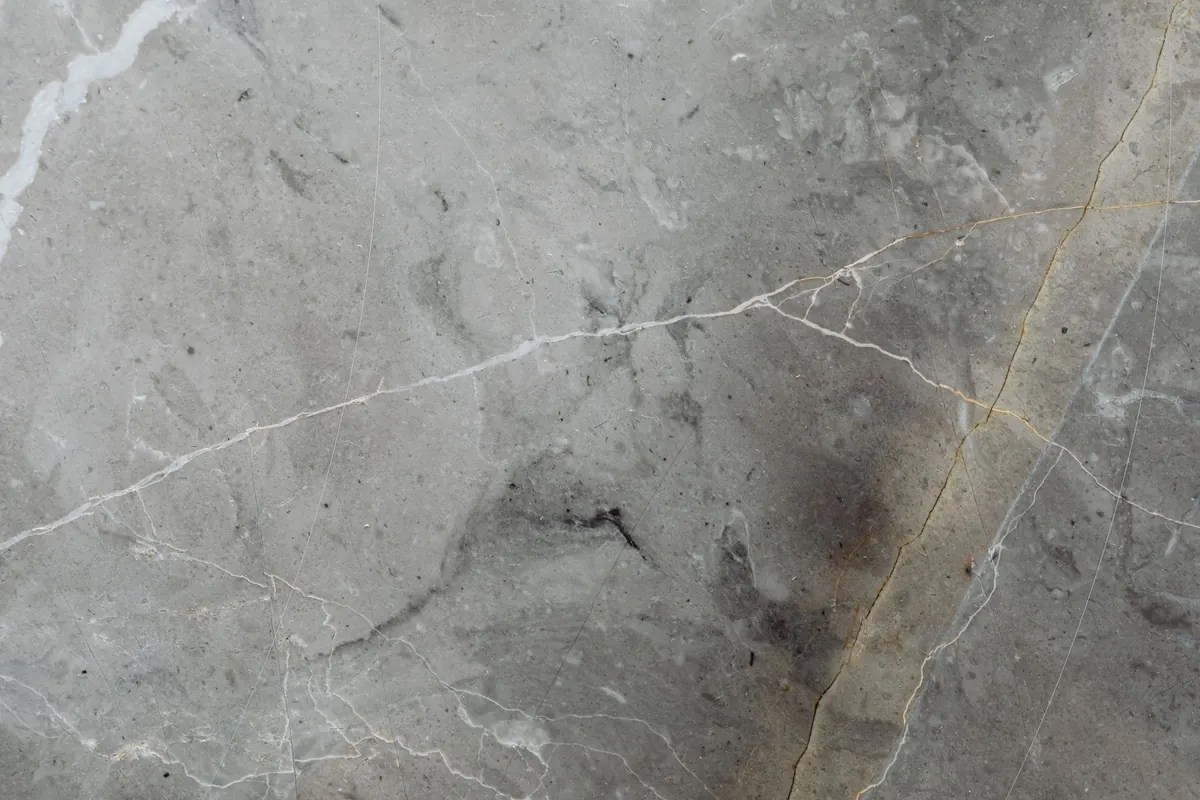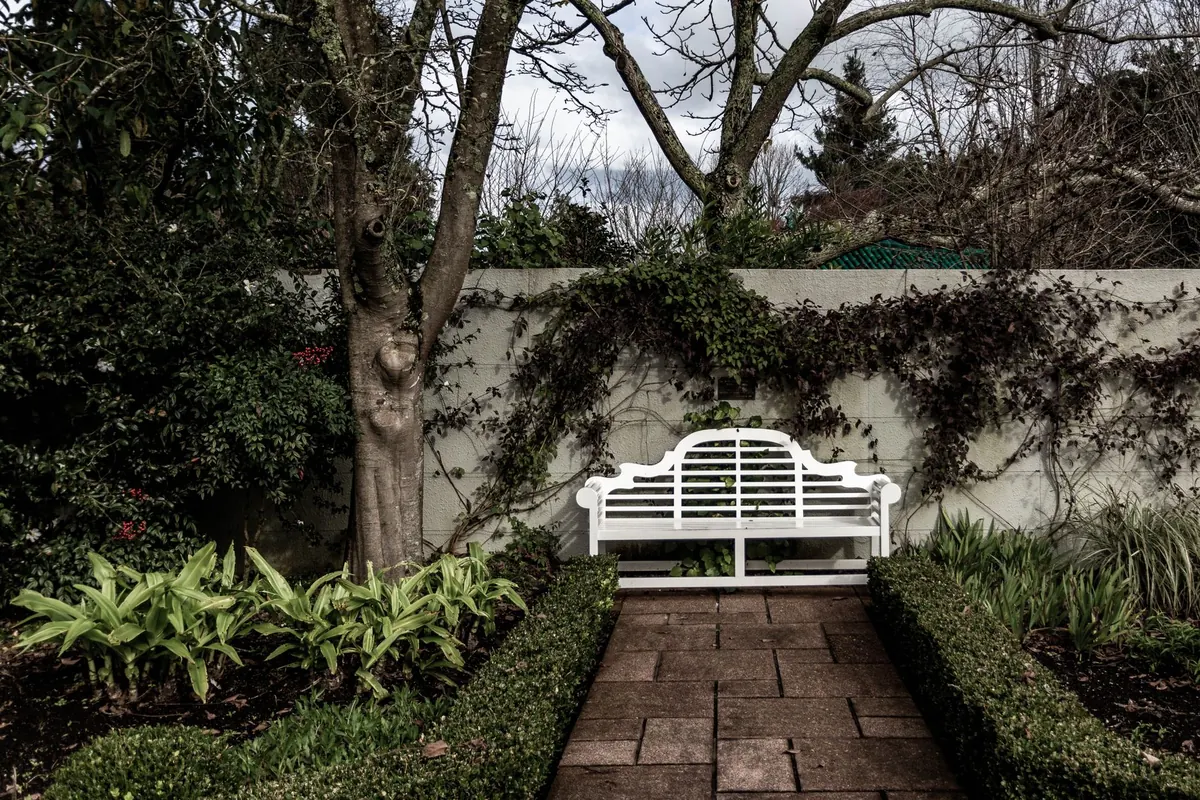
Stone looks permanent, yet a patio rarely fails in a single cold night. It goes slowly, over a handful of winters, through water that soaks in, freezes and pushes. Joint sand loosens, a step nosing spalls, a damp patch spreads across a flagstone and sits there until April. None of that is inevitable. Two dry afternoons in late autumn will do more for a stone terrace than any repair you can buy in spring. Here is the order we suggest working through, from the first sweep to the last bag of grit by the door.
Why Freeze-Thaw Does the Damage
Natural stone is not solid in the way it looks. Sandstone, limestone, travertine and many slates carry pores and fine capillary channels; even dense granite and porphyry have seams and bedding planes where water can sit. When that water freezes it expands by roughly a ninth of its volume, and the pressure goes wherever it can: into the face of the stone, along a joint, behind a coping.
Dense igneous stones shrug most of this off. Porous sedimentary stones, and any stone that has been laid with a shallow fall or poor drainage, take the brunt. The aim of autumn prep is not to make the patio waterproof. It is to reduce how much water the stone is holding when the first hard frost arrives, and to help it dry quickly afterwards.
Clean the Stone Before You Seal Anything
Sealer over dirt traps the dirt, and sealer over damp stone traps the damp. Start with a thorough sweep, including the corners where leaves collect and the risers of steps where grit gathers.
Wash with a cleaner matched to the stone. Marble, limestone and travertine are acid-sensitive: skip the vinegar solution and the descalers borrowed from the bathroom, and use a pH-neutral or mildly alkaline product. A stiff brush and a low-pressure washer with a wide fan tip will lift most grime. Keep the nozzle moving, hold it back from open joints, and never aim a narrow jet at mortar or at the edge of a step, where it can erode the bedding.
Then rinse and wait. Give the stone several dry days before you think about sealing, because the surface can look dry long before the body of the stone is.
Moss, algae and black spot
Green growth means moisture is lingering, usually in shade. Scrape it off, treat the area with a suitable cleaner, and do what you can to improve airflow and light: trim back shrubs, thin overhanging branches, clear the debris that keeps a corner permanently damp. Moss holds water against the surface like a sponge, so removing it before winter is worth the effort.
Rust and tannin stains
Move planters and metal furniture before you wash, so you can see what has been happening underneath. Rust rings from chair feet, and brown tannin marks from wet leaves, are far easier to treat now than after a winter under a sealer. Treat the stain, let the stone dry, and only then decide whether it needs protection.
Sort Out Drainage While You Still Have Daylight
Most winter damage starts with water that had nowhere to go. Walk the patio after rain and look for the places where puddles stand for more than a day.
- Check the fall. A patio should slope gently away from the building, roughly one to two percent, which is enough to move water without feeling like a ramp.
- Clear channel drains, gully gratings and any slot drains of leaves, grit and roots. A blocked linear drain is worse than no drain, because it holds water right against the stone.
- Look at downspouts. If a pipe empties directly onto the paving, extend it into a drain or redirect it onto planted ground well away from the terrace.
- Inspect the joints between paving and the house wall, and the sealant around thresholds, for gaps that let water run in behind the stone.
If a low spot holds water persistently, it is worth lifting and relaying those few stones rather than sealing over the problem. Standing water plus frost is the fastest route to a spalled surface.
Sealing: What It Can and Cannot Do
A good penetrating sealer soaks into the pores and lines them, so water beads and runs off instead of soaking in. The stone still breathes, which matters enormously in freezing weather: moisture that does get in can escape as vapour rather than being trapped under a skin.
Film-forming sealers, which sit on the surface and often darken the stone, look impressive for a season. On a patio exposed to frost they can be a liability. If water gets beneath the film, or if the stone was not fully dry at application, the coating can cloud, flake and take surface material with it.
Before you buy anything, test a patch. Choose a spare tile or an inconspicuous corner, apply as directed, and leave it for a couple of days. Check the colour shift, the finish and whether water still beads after a few weeks. Most products want a dry surface, a dry forecast, and temperatures comfortably above 5°C, so read the label rather than guessing. Two thin coats are almost always better than one heavy one.
Not every patio needs sealing. Tight, dense granite may be fine untreated; porous sandstone and limestone usually benefit. A simple test: if water no longer beads on the surface and darkens the stone quickly, it is time to refresh.
Joints, Edges and the Step Details
Joint sand locks pavers together and slows water penetration, so top up any joints that have washed out. On steps, copings and retaining walls, replace cracked or crumbling mortar pointing before the frost season. A hairline crack is a channel straight into the bedding, and when that freezes, the front edge of a tread can pop off in a single flake.
Note any chips and small spalls now. A clean, dry, sound edge can often be repaired discreetly; a shattered nosing in February usually means replacing the piece. White powdery patches, known as efflorescence, should be brushed off dry and the cause investigated before sealing, otherwise you seal the salt crystals in.
Steps and winter traction
Steps are where accidents happen, so give them a little extra attention. Clear moss and algae from treads and landings, check that handrail fixings are tight, and confirm the nosings are intact and visible. Smooth, polished stone on a north-facing step stays wet and greasy all winter; a discreet anti-slip treatment or a few inset strips can make a real difference, but test any product on an offcut first. Keep a small bucket of grit near the door before the first frost, not after.
Winter Care Through the Season
Once the cold arrives, a few habits protect the work you have done. Shovel early rather than letting snow compact into ice, and use a plastic or rubber-edged shovel; a metal blade scrapes and chips stone edges. Never chop at ice with the shovel.
Be cautious with de-icing salt. Ordinary rock salt is aggressive on porous stone and on the mortar around it, and it does nothing for the garden borders it ends up in. Sand or fine grit gives traction without the chemical load. If you do need a de-icer on a difficult step, use it sparingly, choose a product formulated for natural stone, and sweep up the residue in spring.
Keep piles of cleared snow off the paving where possible, and away from the base of walls, planters and young plants. After a thaw, take five minutes to clear the drains again.
A Sensible Order of Work
- Sweep the whole patio, including step risers and corners.
- Wash with a stone-appropriate cleaner, rinse, and let it dry for several days.
- Clear every drain, grate and downspout outlet.
- Re-sand joints, repoint cracked mortar, and note chips for repair.
- Fix any standing water before sealing.
- Test a patch, then seal if the stone needs it and the forecast is dry.
- Put the plastic shovel, grit and a stiff brush by the door.
None of this is heavy work, and most of it can be done in a couple of dry afternoons. If large areas of stone are already spalling, if water is finding its way into the house, or if a retaining wall or flight of steps looks unstable, stop and bring in a stone specialist. Those are not jobs for a tube of sealant and a free weekend.
Photo: 飞 谢 / Pexels